December Thoughts /

I recorded a video as if I wanted to capture the moment. I couldn’t stop myself, even though I tried. But what does it mean to “capture”? As if a visual memory could bring me back later - comfortably seated on my couch - to this exact instant at the nearby seashore.
While standing there, I suddenly felt as if I were in the Arctic again. Yet despite the vast abundance of water, nothing in my sight resembled the austere northern landscape. Then I realised it was the sound: the rocking sea, water lapping against the pier, a regular impact echoing in the cold. It was stronger than usual after the storms of the previous days. Its rhythm recalled the rocking of a boat sailing through Arctic waters. And then there was the feeling of fresh, cool, dry air on my face.
Turning my eyes away and walking back, I thought about this need to stop time, carried in my pocket as a video. My phone holds the moments I want to remember. But if I were to throw it away, who would carry these memories?
When I return from the seaside, I notice my senses have sharpened. I see and hear more acutely, as if the colours of leaves or the rustle of grass have become more vivid - like Andy Goldsworthy’s art, fleeting yet intensely alive.
Where does this desire come from - to return again and again? Is it the simple, eternal urge to stop time, perversely realised in a phone? Yet it feels like time also gives everything meaning. I think of Juhani Pallasmaa and his insistence that buildings, too, need to carry traces of the passage of time.
Now, as I write, my hands are still cold. They haven’t returned from the ocean. Looking at the image, I do not instantly return to that place or feeling. The sound brings it back. The touch of cold air does. I wonder: if we collected sounds instead of images, would our hearing become oblivious, just as our eyesight is overwhelmed by images? How do I see again - anew?
I often find myself thinking when I talk about something and someone asks if I have an image of it, is this really needed? What if I try to describe it, and you imagine it in your own way? Even - or especially - when I struggle to find the words. If I describe what I remember, and how I remember it, isn’t there a quality in that? A quality in the words I choose, or in their absence; in the feelings or details I recall; in my own filter of what was worth remembering.
I wonder if, in this way, I share more than just an image. When I called my partner after spending two weeks in the Arctic without reception, I couldn’t speak. He told me afterwards that it said everything to him.
I have always criticised myself for not remembering movie titles, names, or complete stories. But I remember very clearly the feelings they evoked in me. You can tell quite a lot about a movie, a play, or anything else by the way it was experienced.
I went to the shore again. It was peaceful. I didn’t take a picture, despite being very tempted. When I turned my eyes away from the view and started walking back, I realised that I still saw it in my head - the light pink colour gracefully dancing on the ocean surface, the various shapes of its wrinkles: deeper, smoother, shorter, longer. All these lines drew an image I carried back home.
Now I feel grateful that I didn’t take that picture. I have this experience stored in my memory. Why does my phone have to carry all my memories, shaped to squares, stripped of meaning? I think about all the images saved on it, taken as a way of stopping time, holding a moment, and feeling safe, because I have a place to store them.
A phone is a leaky vessel for memories. It strips experience down to flat visuals. I feel richer now for not taking this one unnecessary image. One image less. One experience more. I am my own vessel for memories - and I am leaky too. I am beginning to think there is a quality in this leakage.
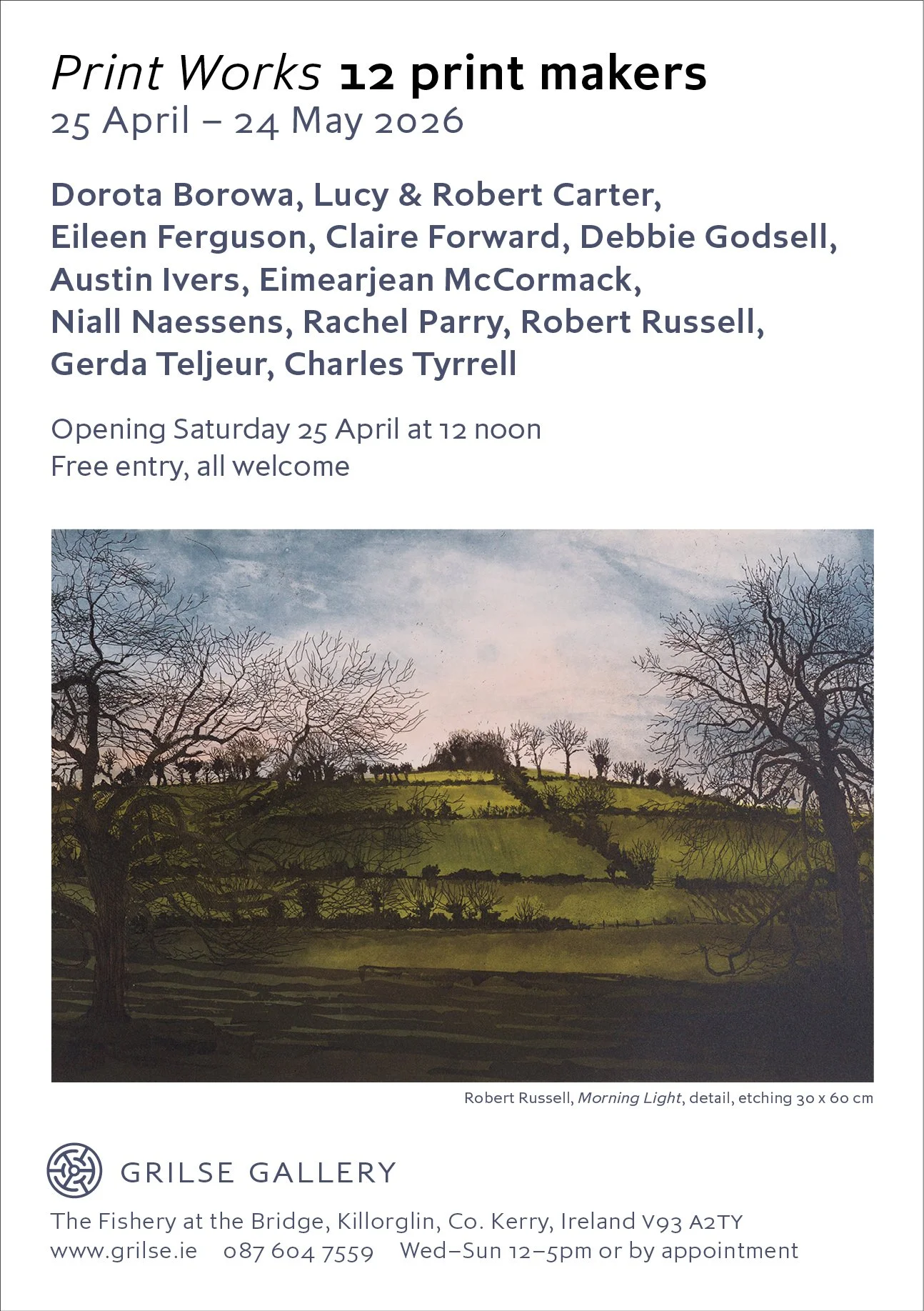
'Kerry Select" at Grilse Gallery, Killorglin, 29 Nov - 21 Dec, 2025 /
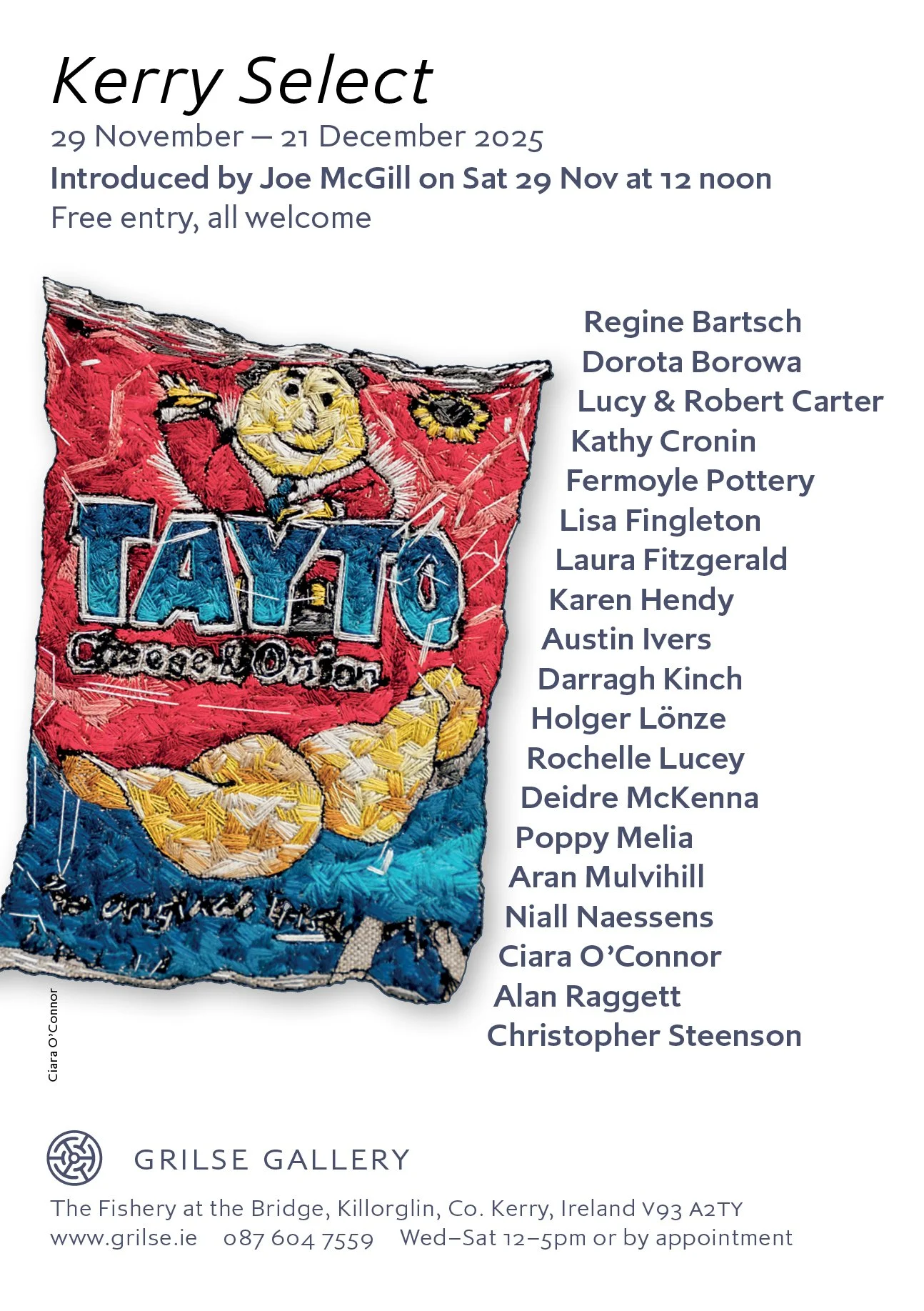
"In Search of Presence" - Available at the Dublin Art Book Fair 2025 /

I’m super excited that the book from my exhibition ‘In Search of Presence’ in Poland, published by Slendzinski Gallery will be available at the Dublin Art Book Fair this year.
The 96-page catalogue presents full spreads of my installation, close-ups, and detailed documentation of all works. It features an essay by James Merrigan, “The Long Pauses of Dorota Borowa,” which explores writing alongside an artist’s practice rather than in direct confrontation; my own text “River Portrait” (an invitation to draw); work descriptions; and a selection of quotes, including those from Roni Horn and Juhani Pallasmaa.
Design, typography, layout, and photo editing: Ewa Pietruszko
Photography: Kamila Dabrowska & Ewa Pietruszko
Text: English + Polish
It’s a catalogue I had the great pleasure of collaborating on with Ewa Pietruszko.
.
Thank you to the staff of Slendzinski Gallery: to Katarzyna Siwerska, the curator of the show, and to Ewa Pietruszko for bringing this project to life as well as Dawid Bujno and Anna Alimowska for their help.
Many thanks to James Merrigan for writing such a beautiful and thought-provoking essay.
—
Dublin Art Book Fair (DABF) is Ireland’s leading art book fair and a centre for contemporary artist books annually produced by Temple Bar Gallery + Studios. It features limited edition books made by artists, designers and independent publishers which can be browsed or bought. Over the ten-day run, DABF produces a free programme of artist workshops, art commissions, book launches, tours, and talks in celebration of the artist book, publishing and artist-run culture.
DABF runs 04–14 December 2025 at Temple Bar Gallery + Studios!
In 2025, DABF is guest curated by Dr. Selina Guinness, her theme is Flock. Through a selection of talks and nominated books, Guinness examines all things pastoral: humans and beasts; the relational art of shepherding; and the impact of flocks on habitats.
Temple Bar Gallery + Studios
@dublinartbookfair
#DABF25
Design: Alex Synge
#sitespecific
#contemporaryartist


"In Search of Presence" at Grilse Gallery, Killorglin, Ireland /

“In Search of Presence” at Slendzinski Gallery, Bialystok, Poland /
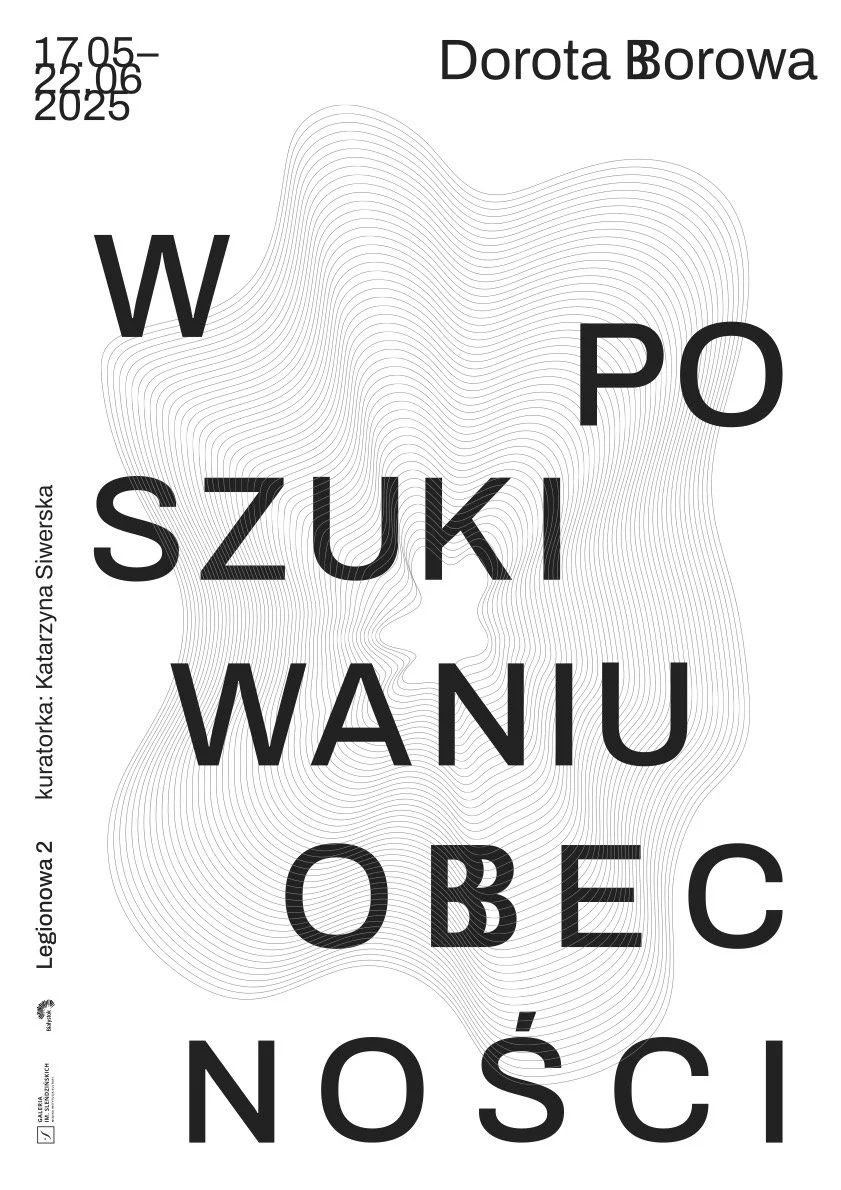
Design by Ewa Pietruszko
Slendzinski Gallery
Studio Exhibition at Uillinn West Cork Arts Center, Skibbereen /
A huge thank you to everyone who joined me at my studio exhibition on the final day of my residency at Uillinn West Cork Arts Center. I was truly moved by all the responses and loved every conversation. I’m deeply grateful to West Cork Arts Center for this opportunity, which provided incredible support and gave me the space and time to reflect on my practice and explore pathways I had never taken before.
Here are a few quotes that accompanied me on my journey of creating this installation:
If, for diagrammatic convenience, one accepts the metaphor of time as a flow, a river, then the act of drawing, by driving upstream, achieves the stationary.
John Berger, “On Drawing”
1605
Each that we lose takes part of us;
A crescent still abides,
Which like the moon, some turbid night,
Is summoned by the tides.
Emily Dickinson
A pebble polished by waves is pleasurable to the hand, not only because of it’s soothing shape, but because it expresses the slow process of its formation; a perfect pebble on the palm materialises duration, it is time turned into shape.
Juhani Pallasmaa, “The Eyes of the Skin”
I carry it, constantly
I carry it all
Tess Leak in collaboration with Gerald O’Brien, a poem celebrating the rich heritage of the River Ilen flowing through Skibbereen (a mural in the town center of Skibbereen)




About Drawing /
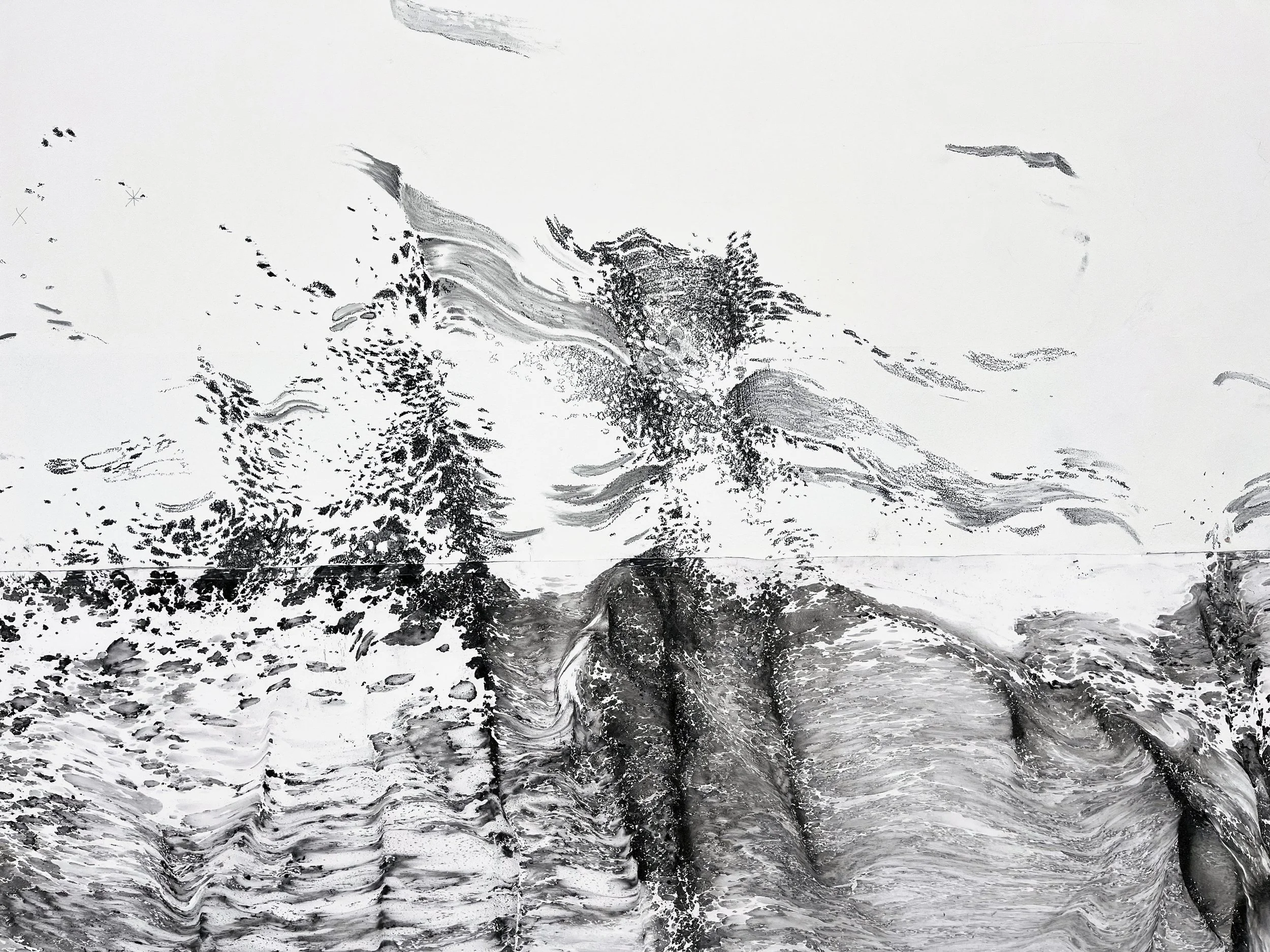
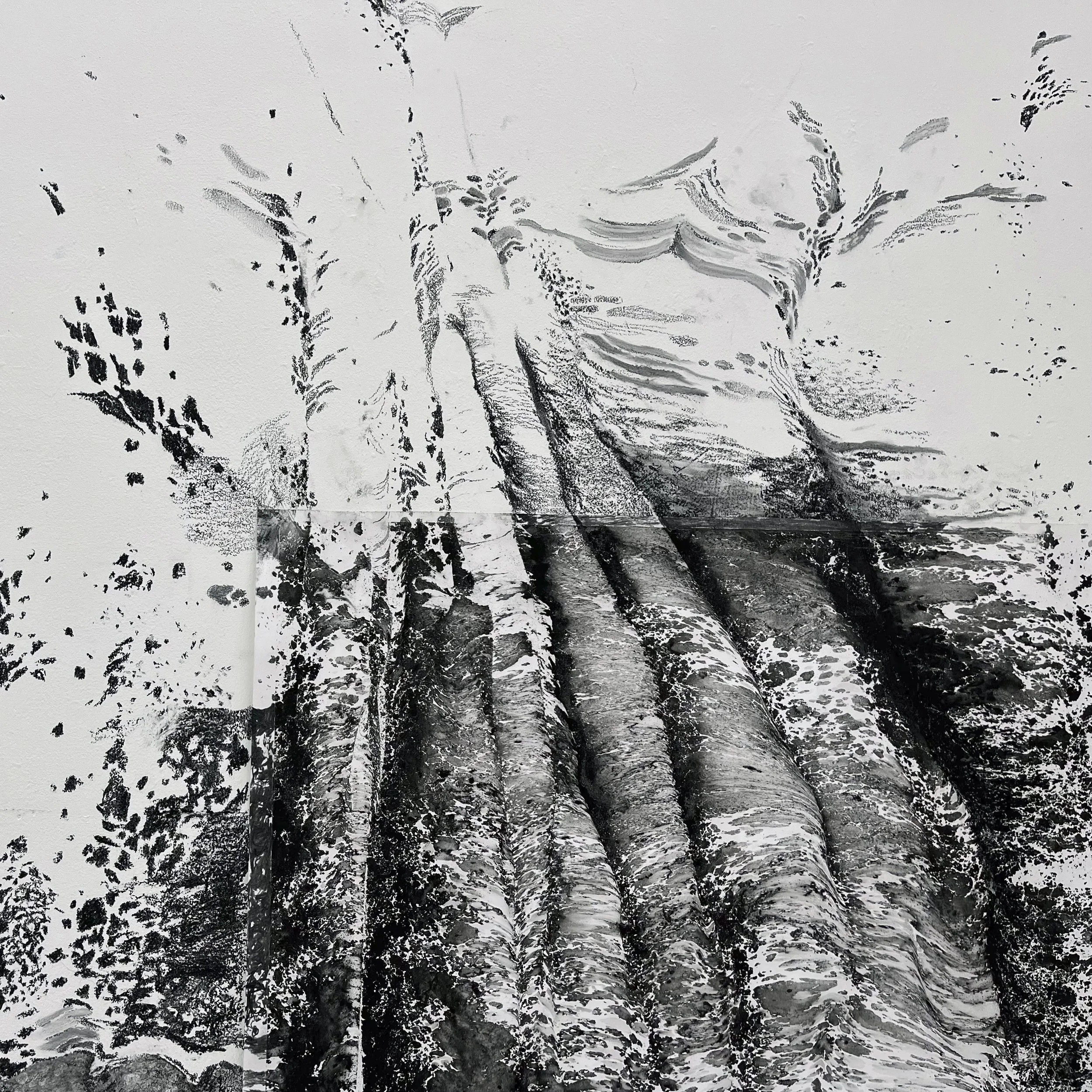
Image from the site-responsive installation at Uillinn West Cork Arts Center Residency
“...drawing is a manual activity whose aim is (...) to turn appearances and disappearances into a game that is more serious than life,” says John Berger in his letter to Jim Elkins (p 109 -110)
I add a line to my drawing on the wall - movement appears. Another line - movement disappears. A few more dots, and the drawing falls apart into space. A good few more, and a wave emerges. What am I chasing here? After a while, I realize that I'm after a feeling I experienced in the Arctic. A sensation of being more alive. But what is it to feel ‘more alive’? For me it is a heightened awareness of existence - of being part of everything else. In a conversation with Piotr Brysacz a Polish writer Andrzej Stasiuk suggests that humans have a metaphysical need to take part in something greater than themselves - something that transcends them. And space fulfills that need. ("Patrzac na Wschod", p. 22) I believe making art can bring me a small piece of that feeling back. And John Berger writes in the same letter that drawing “is as fundamental to the energy that makes us human as singing and dancing” (p. 109).
Drawing is also about seeing - and about not seeing. I have to leave my studio to truly see the drawing again. When I work too long, I stop seeing it. And as I type this, a thought arises: isn’t life like that too? I stop seeing the parts of life I’ve become too used to. Maybe, on Monday morning, as I prepare lunch for my daughter, I should leave 'the room' for a second too, then come back and see it all over again. See her, sitting there in carefully chosen clothes (and really see them!) and hear her asking if all wood has to be oiled. She leaves ‘her room’ far more often than I do. Being young, she hasn’t yet grown accustomed to life.
When I was in my 20s I wrote a text for an art book which my sister and I were working on together. In it, I described a dream I had: I was in a kind of yoga class, where they asked me to bite my own arm - to push beyond my own limits. I started wondering - what if you could step outside yourself, just for a moment? Step out, have a coffee, throw the litter away, see yourself from the outside, and then step back in. How wonderful that would be.
Later in life, I learned that certain experiences let you, help you, or force you to step outside yourself. Or you just need more time. You see it, but you can’t change it. Still, seeing it can change your present perception of yourself. Like me now, reading a text I wrote many years ago.